Global buyers often look to China for dependable components, flexible production, and competitive pricing. Yet a low unit cost tells only part of the story. A supplier’s ability to follow a drawing, control tolerances, and communicate changes can matter just as much. For buyers searching for “solutions parts,” the real challenge is finding a partner whose process fits the product, not just the quotation.
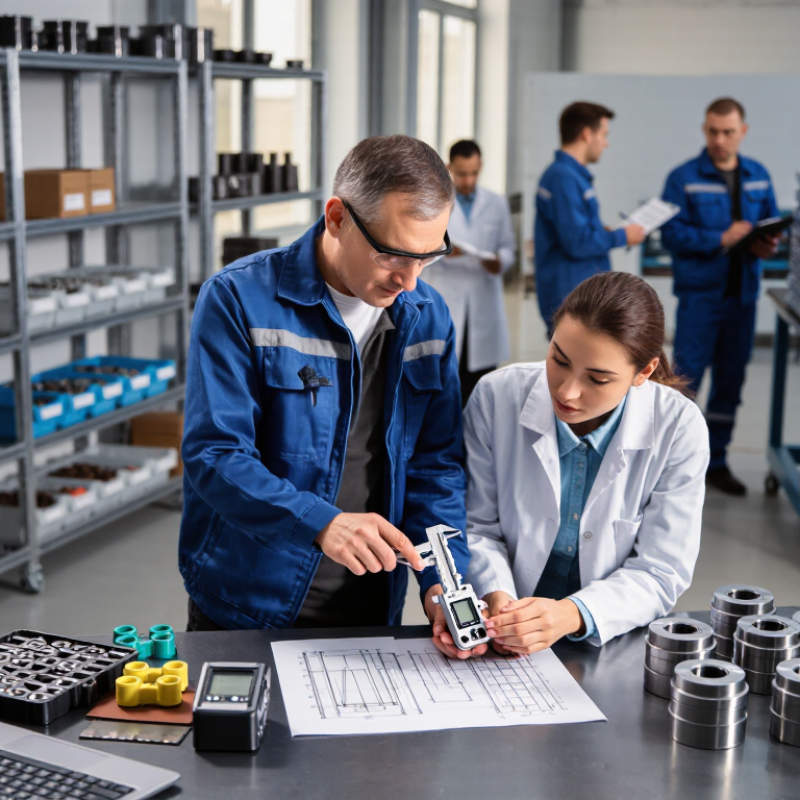
China’s parts sector spans precision-machined components, castings, molded products, and custom assemblies. Capabilities vary by factory, so broad promises deserve careful verification. Request material specifications, inspection records, sample parts, and clear lead-time estimates. For a machined component, for example, compare its critical dimensions against the drawing and confirm how the supplier checks them. Ask who handles quality issues and how corrective actions are documented. These details make supplier comparisons more useful than price alone.
Good sourcing takes patience. Small details count. A polished sample may not prove consistent production, and even a thorough checklist can miss a problem. Buyers should assess communication, production capacity, packaging, and shipping arrangements before placing larger orders. Independent inspections may also help when the order value or technical risk justifies them. Requirements differ by product and destination, so confirm applicable standards with qualified professionals rather than relying on general assurances. The strongest China parts solutions combine verified capability, transparent records, and realistic expectations. No supplier is perfect; a careful process helps buyers spot gaps early and make decisions with greater confidence.
China’s parts supply landscape is broad, but it is not one uniform market. UNIDO’s International Yearbook of Industrial Statistics 2024 estimates that China generated about 31.8% of global manufacturing value added in 2023. That scale supports dense networks for machining, castings, electronics, and surface finishing. Customs data adds context: mechanical and electrical goods made up 59.4% of China’s exports in 2024, worth 16.06 trillion yuan. These categories are wider than parts alone. Not interchangeable. A large export figure does not prove that a specific component is easy to source reliably.
For buyers, the practical challenge is matching a supplier’s actual process to the drawing and required production volume. Check material certificates, dimensional inspection records, tooling ownership, and capacity at the production site. Ask how changes are approved and how batches are traced. A polished sample can hide variation across a full run. Even a clear drawing may leave tolerance or finish details open to interpretation. Independent audits and trial orders can expose gaps before routine shipments begin, though they add time and cost. The supply base offers depth; verification still takes work.
| Parts Category | Common Processes and Products | Established Manufacturing Areas | Potential Fit for Buyers | Key Checks Before Ordering |
|---|---|---|---|---|
| Electronic components and assemblies | PCB fabrication and assembly, cable assemblies, connectors, power supplies, and electronic enclosures | Pearl River Delta, including parts of Guangdong; Yangtze River Delta, including Shanghai, Jiangsu, and Zhejiang | Products needing a combination of component sourcing, assembly, and production testing | Confirm component traceability, approved substitutions, electrical test coverage, and applicable safety or electromagnetic-compatibility requirements. |
| CNC-machined metal parts | Milling, turning, drilling, grinding, and secondary finishing for aluminum, steel, brass, and other metals | Manufacturing clusters across Guangdong, Jiangsu, Zhejiang, and Shandong | Prototypes and production parts with defined dimensions, material grades, and surface requirements | Provide controlled drawings and tolerances; verify material certificates, measurement methods, surface finish, and first-article inspection results. |
| Sheet-metal parts and enclosures | Laser cutting, punching, bending, welding, and powder coating | Commonly available in the Pearl River Delta and Yangtze River Delta, with additional capacity in other industrial regions | Cabinets, brackets, panels, frames, and other fabricated metal components | Check gauge and material specifications, bend and hole tolerances, weld quality, coating thickness, and corrosion-protection requirements. |
| Plastic molded parts | Injection molding, overmolding, insert molding, and mold or tooling production | Guangdong, Zhejiang, and Jiangsu have broad plastics and manufacturing supply networks | Repeat-production components where tooling investment can be justified by expected volume | Agree on resin grade and color, mold ownership and maintenance, sample approval, dimensional inspection, and any required material or product compliance tests. |
| Fasteners and standard hardware | Bolts, screws, nuts, washers, stamping parts, and cold-formed metal products | Zhejiang and Jiangsu are notable hardware and fastener production areas; suppliers also operate elsewhere | Assemblies requiring repeatable standard or custom fastening components | Specify the applicable standard, dimensions, material, strength class, coating, corrosion test, and sampling or lot-inspection plan. |
| Bearings, pumps, and mechanical components | Bearings, valves, pumps, gears, castings, and machined mechanical parts | Production is distributed across Zhejiang, Jiangsu, Shandong, and other established industrial provinces | Industrial equipment, machinery maintenance, and general mechanical assemblies | Validate operating conditions, materials, performance test records, dimensional tolerances, and consistency between samples and production lots. |
| Automotive and transport components | Metal stampings, molded parts, wiring assemblies, and other vehicle components | Automotive supply chains are present in several regions, including the Yangtze River Delta, Pearl River Delta, and Bohai Rim | Programs that require documented quality controls and repeatable production processes | Check customer-specific requirements, change control, traceability, production approval documentation, and relevant automotive quality-system expectations. |
| Custom assemblies and kitting | Combining fabricated, molded, electronic, or purchased parts into a finished subassembly or kit | Available in major manufacturing clusters, particularly where component suppliers and logistics services are accessible | Buyers seeking fewer inbound shipments or a consolidated assembly supply route | Define the bill of materials, approved sources, assembly instructions, functional tests, packaging, and responsibility for defects across components. |
Buyer note: These are broad, non-ranked patterns in China’s manufacturing landscape, not a guarantee of any supplier’s capability. Actual capacity, quality systems, export experience, lead times, and compliance depend on the individual supplier and product specifications.