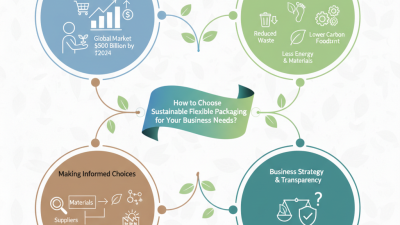
For global buyers, packaging is no longer a simple choice between plastic, paper, or glass. It affects product protection, freight emissions, shelf life, and customer trust. The 2026 Best Sustainable Packaging Solutions for Global Buyers examines practical options for food, cosmetics, retail, and industrial goods. It focuses on materials that perform beyond the showroom.
As circular-design authority William McDonough says, “Waste equals food.” This principle challenges buyers to consider packaging’s full journey. Can a fiber tray withstand moisture? Can a mono-material pouch enter existing recycling systems? Does recycled content remain reliable during long-distance transport? These questions matter more than attractive environmental claims. Sustainable packaging solutions should be tested through barrier performance, drop resistance, filling-line compatibility, and end-of-life conditions.
No package is perfect.
A lightweight design may reduce shipping emissions but shorten product life. A compostable format may sound responsible but fail where industrial composting is unavailable. Recycled plastic can reduce virgin material use, yet supply quality may vary by region. Responsible sourcing requires evidence, supplier audits, clear specifications, and honest communication. Buyers should compare total impact, not isolated material benefits. They should also review local collection infrastructure before approving a global rollout.
This guide offers a grounded starting point. It connects expert principles with purchasing realities, including cost pressure, export requirements, warehouse handling, and changing consumer expectations. Some recommendations may need revision as technology and infrastructure develop. That uncertainty deserves attention, not concealment. The strongest packaging decision protects the product, reduces avoidable waste, and remains credible after sale.
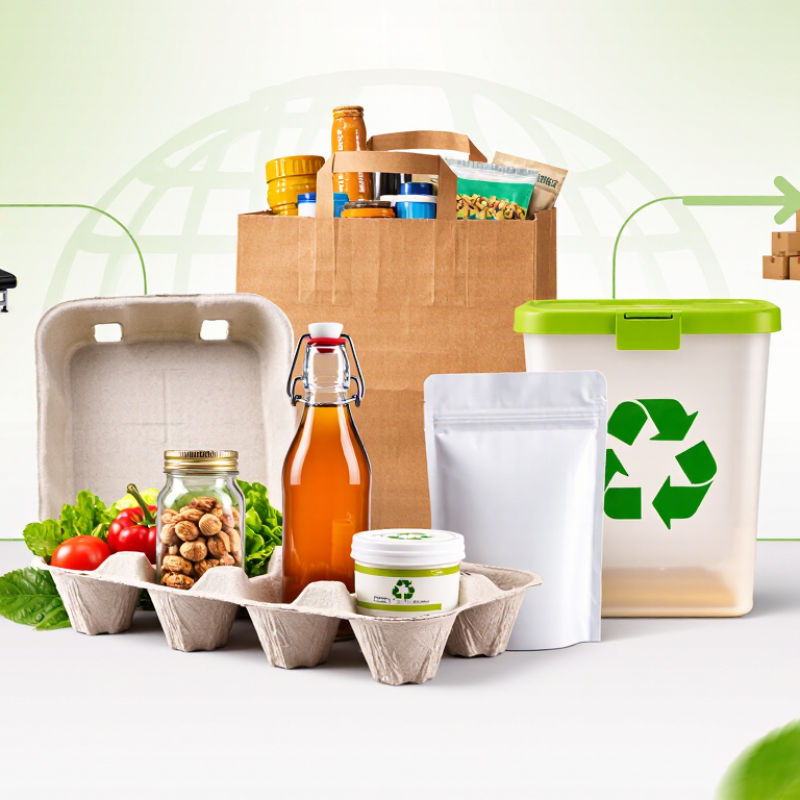
Sustainable packaging means reducing environmental harm across a package’s full life cycle. It includes material extraction, manufacturing, transport, use, and end-of-life management. The goal is not simply replacing plastic with paper. It is reducing material use while protecting products and supporting realistic recovery systems. The OECD’s Global Plastics Outlook reports that global plastic waste reached 353 million tonnes in 2019, while only 9% was recycled. These figures show why measurable design decisions matter.
Global buyers should request evidence, not broad environmental claims. ISO 18601–18606 provides a framework for packaging and environmental management, while ISO 14040 and ISO 14044 guide life-cycle assessment. ISO 14067 can support product carbon-footprint calculations. However, standards do not guarantee equal results in every market. A recyclable package may fail where collection facilities are limited. UNEP’s Turning off the Tap report states that plastic pollution could fall by 80% by 2040 through reuse, recycling, and better product design. The path is practical, but not effortless.
Tips: Ask suppliers for material weight, recycled content, and recovery assumptions. Compare packaging options using the same functional unit, such as one protected shipment. Check local sorting rules before approving compostable formats. Small details matter. Our industry still lacks perfectly consistent data across regions, so buyers should document uncertainty instead of hiding it.

Global buyers are reassessing packaging materials for 2026. Lower emissions matter, but performance still protects products, budgets, and customer trust. Recycled paperboard suits cartons, sleeves, and dry goods. It offers a familiar surface for printing and easier fiber recovery.
For moisture-sensitive products, molded fiber with water-based coatings can replace some plastic trays. Compostable films may support selected food applications, but only where commercial composting facilities exist. This limitation is often overlooked. Reusable containers work well in closed delivery systems, especially with predictable return routes. Lightweight mono-material pouches also simplify sorting when local recycling systems accept them.
Packaging format should match the supply chain. Flat-packed cartons save warehouse space. Stackable trays reduce movement during transport. Buyers should request barrier testing, seal-strength results, migration reports, and packaging weight data. They should also check whether recycled content remains stable across suppliers. In one pilot review, a thinner carton reduced material use but failed at a damp loading dock. The cheaper option became waste. No format is perfect. A practical specification should include product protection, disposal access, shipping distance, and local infrastructure. Supplier claims need independent evidence, not attractive wording alone. Even a recyclable package may be ineffective when collection systems are weak. That uncomfortable detail deserves attention during every purchasing decision.
| Material / Format | Typical Recycled or Renewable Content | Primary End-of-Life Route | Key Sustainability Advantages | Important Design Requirements | Best-Fit Applications in 2026 |
|---|---|---|---|---|---|
| Recycled Corrugated Fiberboard | Typically 70–100% recovered fiber, depending on grade and performance requirements. | Paper recycling collection systems. | High recycled-fiber potential, broad collection availability, lightweight structure, and good protective performance. | Avoid unnecessary plastic windows, metallic coatings, wax, and excessive adhesive contamination. | E-commerce shipping boxes, transport cases, subscription packaging, and secondary packaging. |
| Recycled Paperboard Folding Cartons | Approximately 30–100% recycled fiber; the exact level depends on stiffness, print quality, and barrier needs. | Paper recycling, where accepted by local systems. | Renewable fiber feedstock, efficient nesting, low storage volume, and easy printing. | Use water-based coatings or recyclable dispersion barriers instead of difficult-to-separate laminates. | Dry food, personal care, household products, and retail gift packaging. |
| Molded Fiber Packaging | Commonly 60–100% recovered or plant-based fiber, depending on the product specification. | Paper recycling; some certified fiber products may be compostable where facilities exist. | Replaces expanded plastic cushioning, uses renewable feedstock, and can provide strong product protection. | Control moisture resistance carefully and verify that coatings do not prevent recycling or composting. | Electronics inserts, food trays, protective end caps, and cosmetic presentation packs. |
| Post-Consumer Recycled PET | Commercial grades commonly range from 25–100% recycled PET, subject to food-contact and performance rules. | Bottle and rigid-plastic recycling streams where available. | Uses recovered plastic, provides good clarity and strength, and can support bottle-to-bottle recycling. | Use compatible labels, closures, and adhesives; confirm recycled-content traceability and food-contact compliance. | Bottles, jars, trays, clamshells, and transparent retail packaging. |
| Post-Consumer Recycled HDPE | Approximately 25–100% recycled HDPE, depending on color, strength, and regulatory requirements. | Rigid-plastic recycling systems. | Durable, moisture-resistant, lightweight, and suitable for repeated recycling when properly collected. | Prefer natural or light colors, avoid incompatible multilayer structures, and design for easy sorting. | Household-care bottles, personal-care containers, caps, tubs, and transport packaging. |
| Aluminum Packaging | Recycled content varies widely by product and market; aluminum can be recycled repeatedly without loss of basic material properties. | Metal recycling systems. | High material value, strong barrier against light and oxygen, and recycling can use about 95% less energy than primary aluminum production. | Minimize mixed-material attachments, use removable components, and optimize wall thickness to reduce material use. | Cans, beverage containers, cosmetic tins, closures, and premium barrier packaging. |
| Glass Containers with Recycled Cullet | Recycled cullet content may range from approximately 20–90%, depending on color, furnace capacity, and local collection quality. | Glass container recycling. | Excellent product barrier, inert surface, strong reuse potential, and repeated recyclability. | Reduce wall weight where safe, standardize colors, and design for return or refill systems when logistics permit. | Food jars, beverage bottles, fragrances, cosmetics, and refillable local-delivery systems. |
| Mono-Material PE or PP Flexible Packaging | Recycled content is technically possible, but availability is limited for some high-barrier and food-contact applications. | Flexible-plastic recycling where dedicated collection and sorting exist; otherwise disposal may remain the route. | Lower packaging weight, efficient shipping volume, and improved recyclability compared with complex multilayer structures. | Use one dominant polymer family, compatible inks and adhesives, and clear disposal instructions. | Stand-up pouches, refill packs, frozen-food bags, sachets, and personal-care refills. |
| Certified Compostable PLA or Other Biopolymer | Usually plant-derived; recycled content is generally not the main sustainability attribute. | Industrial composting only when the product is certified and a suitable facility accepts it. | Can support organic-waste collection for selected food-service applications and reduce dependence on fossil feedstocks. | Do not claim home compostability unless specifically certified; prevent contamination of conventional recycling streams. | Food-service items, produce bags, selected coffee applications, and organic-waste liners. |
| Reusable PP Packaging Systems | Recycled content can be incorporated, but environmental performance primarily depends on the number of verified reuse cycles. | Return, wash, inspect, and refill loops; recycling at the end of service life. | Can reduce single-use packaging when return rates, cleaning efficiency, and transport distances are well managed. | Design for durability, standardized collection, efficient washing, loss tracking, and clear customer return instructions. | Local food delivery, grocery refill programs, catering, workplace meals, and closed-loop logistics. |
Data note: Recycled-content ranges are indicative technical ranges rather than universal market averages. Actual values depend on local feedstock availability, product safety requirements, collection infrastructure, processing technology, and applicable regulations.
Evaluation basis: Material and format descriptions are aligned with commonly used packaging-design principles, recycled-content requirements, recyclability guidance, and industrial compostability criteria such as ISO 14021, EN 13432, and ASTM D6400.
Global buyers need packaging that survives real supply chains, not just laboratory demonstrations. A sustainable option must protect products through loading, humidity, vibration, and repeated handling. In supplier trials, I test filled cartons under stacked weight and rough transport conditions. We drop cartons. Then inspect seams, corners, and inner cushioning. Compression results reveal whether a lighter design can remain reliable. Humidity matters too. A box that performs well in a dry warehouse may soften during ocean transit. Performance records should include product damage rates, pack weight, dimensions, and testing conditions.
Cost evaluation should go beyond the quoted unit price. Include tooling, freight, storage space, labor, disposal fees, and minimum order quantities. A lightweight package may reduce freight costs, but thinner material can increase damage claims. That trade-off needs real shipment data. Small pilot orders are useful, although they may not represent peak-season pressure. I have seen promising designs fail when warehouse teams pack them quickly. Ease of assembly is a cost factor.
Environmental review starts with verified material information. Ask for composition, recycled content, manufacturing energy data, and end-of-life guidance. A life-cycle assessment can compare material extraction, production, transport, use, and disposal. However, its result depends on assumptions. Recycled content may lower impacts, yet local recovery systems can be limited. End-of-life claims need regional evidence, not attractive wording. Collection realities vary widely. I prefer documented test reports and supplier declarations over vague environmental promises. The calculation is never perfect. I still question whether a heavier reusable pack truly performs better after long-distance return transport.
2026 sustainable packaging sourcing requires evidence, not attractive color or vague environmental claims. The OECD’s Global Plastics Outlook reports 353 million tonnes of plastic waste in 2019, twice the 2000 level. Packaging represented about 40% of that waste. Global buyers should request a complete bill of materials, recycled-content records, coating details, adhesive specifications, and country of origin. A supplier sample is not enough. Ask for migration, strength, recyclability, and food-contact test reports from competent laboratories. Details matter.
Compliance now moves across borders. The European Union’s Packaging and Packaging Waste Regulation entered into force in February 2025, with general application from August 2026. It introduces stricter requirements for packaging design, recyclability, labeling, and producer responsibility. Other markets may use different definitions and reporting systems. A practical supplier scorecard should assess legal fit, documentation quality, lead time, minimum order quantity, carbon data, and local end-of-life options. Certificates help, but verification is still necessary.
Supplier selection should include a pilot order and a real packaging-line trial. Test cartons during humid transit. Measure drop resistance, pallet compression, seal performance, and damage rates. A lighter package may require extra protective material. That weakens the original benefit. The New Plastics Economy report estimated that 80–120 billion dollars in plastic packaging value is lost annually after one use. Buyers should therefore challenge carbon claims, review calculation boundaries, and confirm whether recycling actually exists in the destination market. Our early sourcing assumptions can be wrong. Procurement teams need to document those failures, not hide them.
In 2026, sustainable packaging will move beyond simple material substitution. Global buyers are testing fiber-based barriers, compostable coatings, reusable formats, and packaging made with verified recycled content. The best solution depends on local collection systems, product shelf life, and transport distance. No material wins everywhere.
Emerging technologies are improving both design and recovery. Artificial intelligence can identify polymers on sorting lines, while digital watermarks may improve material separation. Enzymatic recycling is also developing for selected plastics, but commercial scale remains uneven. UNEP’s 2023 report estimates that systemic changes could reduce global plastic pollution by 80% by 2040. That opportunity is significant, but implementation is not simple. A recyclable pack is not automatically recycled.
Data should guide purchasing decisions. The OECD’s Global Plastics Outlook reports that only about 9% of plastic waste was recycled globally in 2019. It also projects plastic waste could nearly triple by 2060 without stronger intervention. Buyers should request lifecycle data, recycled-content evidence, barrier-performance testing, and recovery assumptions. Refill systems may cut packaging waste, yet they can add cleaning, reverse logistics, and water impacts. This trade-off is often overlooked. The practical future may be hybrid: lightweight mono-material packs where infrastructure is strong, and durable reusable systems in controlled supply chains. Mistakes will happen. Transparent measurement matters more than perfect claims.
Emerging Technologies and Future Trends in Sustainable Packaging
Recycling performance varies significantly by packaging material. Paper and cardboard, glass, and metal currently provide stronger recycling benchmarks, while plastic and wood require greater investment in mono-material design, chemical recycling, reuse systems, and improved collection infrastructure. Buyers can use these material-level results as a practical reference when evaluating sustainable packaging options for global supply chains.
Data source: Eurostat, Packaging waste by waste management operations, 2022 EU-27 recycling rates. Rates are rounded to one decimal place.