China Top 10 Packaging Machine Manufacturers 2026
China’s packaging machinery sector is entering 2026 with stronger automation, broader exports, and more demanding buyers. This guide, “China Top 10 Packaging Machine Manufacturers 2026,” examines companies shaping that development.
The evaluation focuses on practical evidence. We consider machine performance, product consistency, customization, factory capability, export experience, and after-sales support. Important details include servo-driven movement, filling accuracy, hygienic stainless-steel construction, quick changeovers, and remote diagnostic options. These features affect production more than impressive brochures do.
Details matter.
Food, beverage, pharmaceutical, cosmetic, and household-product producers may require very different packaging machines. A high-speed pouch machine is not automatically suitable for fragile products. A low purchase price may also hide expensive maintenance, training, or spare-part delays. Therefore, this ranking does not rely on company size alone. It considers how reliably each manufacturer converts technical promises into daily production results.
Jorge Izquierdo, Vice President of Market Development at PMMI, has emphasized, “Automation must be matched with the right workforce and the right process.” That principle remains relevant in China’s rapidly modernizing market. Smart controls can improve visibility, but operators still make critical decisions during changeovers and unexpected stoppages.
No ranking is perfect. Supplier performance can vary by project, region, and machine model. Buyers should verify certifications, test samples, inspect references, and request a detailed service agreement before purchasing. This introduction presents a careful starting point, not a final verdict. The strongest manufacturers combine engineering depth with honest communication, measurable output, and support that continues after installation.
Industry Scope and Packaging Machine Categories in China
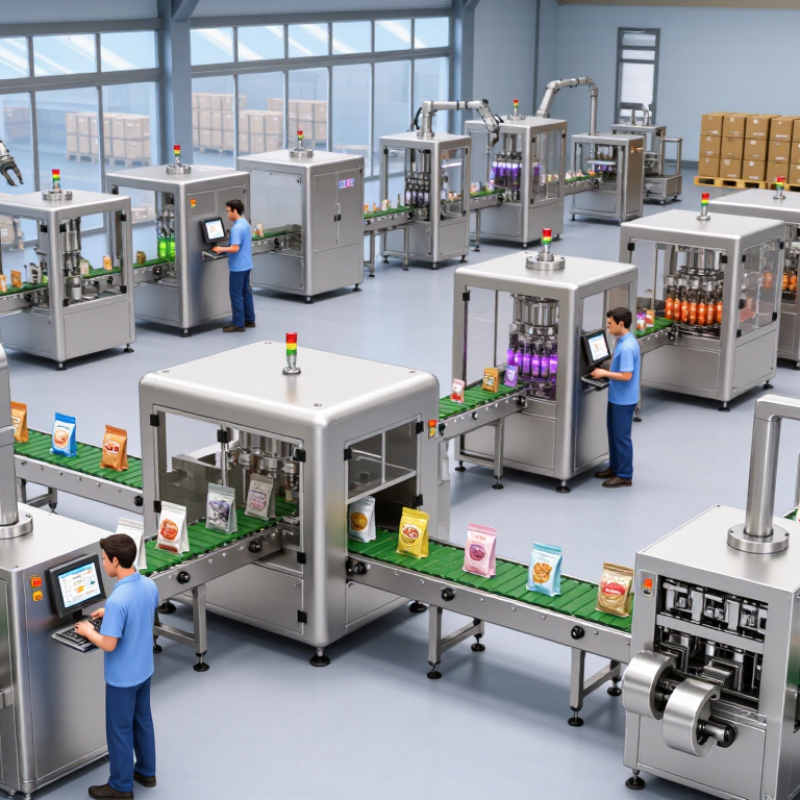
China’s packaging machinery sector serves food, beverages, medicine, cosmetics, household goods, and industrial materials. Its scope extends from single machines to integrated lines with inspection, coding, and robotic handling. Demand varies by product texture, container shape, speed, hygiene level, and factory space. A small workshop may need a compact filler, sealer, and labeler. A large plant often requires synchronized systems and data tracking.
The main categories include filling machines, capping machines, sealing machines, labeling machines, cartoners, case packers, and wrapping equipment. Form-fill-seal systems create, fill, and close bags in one process. Liquid fillers handle water-like products differently from thick sauces or creams. Powder equipment needs accurate dosing and dust control. Vacuum and modified-atmosphere systems support selected food applications. These distinctions affect output, waste, cleaning time, and operator training.
Reliable evaluation starts with a tested sample, not a brochure. Check contact materials, sealing consistency, changeover time, safety guarding, and spare-part access. Chinese factories often offer customization, but customization can complicate validation and maintenance. A machine that runs fast during a demonstration may struggle with unstable materials. That gap deserves attention. Buyers should review records, acceptance criteria, and after-sales response before signing. Category boundaries are not always clean; one line may combine filling, labeling, and inspection.
China Top 10 Packaging Machine Manufacturers 2026 — Industry Scope and Packaging Machine Categories in China
Estimated 2026 category mix of packaging machinery demand in China, covering primary packaging, secondary packaging, end-of-line automation, and supporting equipment.
Filling and sealing equipment represents the largest category because it is used across food, beverage, pharmaceutical, chemical, and daily-consumer-goods production. Labeling, cartoning, wrapping, palletizing, coding, and inspection systems form the main supporting scope of China's packaging machinery industry. The percentages show an estimated category distribution rather than individual company or brand performance.
How the 2026 Manufacturer Ranking Is Evaluated
China Top 10 Packaging Machine Manufacturers 2026
How the 2026 Manufacturer Ranking Is Evaluated
The 2026 ranking uses evidence, not promotional claims. Evaluation begins with verified production capacity, machine uptime, changeover speed, and documented installation results. PMMI’s 2024 State of the Industry report estimated U.S. packaging machinery shipments at about $11.3 billion, showing strong demand for measurable productivity. That demand makes factory performance more important than company size alone.
Each manufacturer receives weighted scores across six areas: engineering capability, product reliability, service response, export experience, safety compliance, and lifecycle cost. Independent testing records and customer references carry more weight than showroom demonstrations. Energy consumption is also measured per production cycle. Smithers’ packaging outlook identifies sustainability and resource efficiency as major market priorities through 2028. Small savings matter.
Service evidence can change the ranking. We review spare-parts availability, remote diagnostics, technician response times, training records, and warranty claims. A fast machine is not useful if operators wait weeks for a critical component. The ranking also checks certifications, audit procedures, and production traceability. However, public data remains uneven. Some manufacturers disclose detailed failure rates, while others provide only broad statements. That gap can reduce scoring, even when the equipment appears capable.
Experience adds another test: machines must perform consistently after installation, not only during acceptance trials. We consider long-term operating records, but these records are often incomplete. Numbers can mislead. Therefore, the final list combines documented data, technical interviews, site evidence, and cautious judgment.
Profiles of China’s Top 10 Packaging Machine Manufacturers
China Top 10 Packaging Machine Manufacturers 2026
China’s top ten packaging machine manufacturers reflect a market moving from basic automation toward connected production. Smithers’ The Future of Packaging to 2028 estimates the global packaging market exceeded 1 trillion US dollars in 2023. That scale increases demand for faster, cleaner, and more traceable machinery.
The first profile focuses on vertical form-fill-seal systems for snacks, powders, and granular products. Another specializes in liquid filling, offering servo-driven dosing and stainless-steel contact parts. Cartoning and case-packing manufacturers target factories seeking fewer manual handling steps. Labeling specialists emphasize camera inspection and accurate placement on curved containers. Palletizing producers provide robotic cells that reduce repetitive lifting. Flexible packaging equipment makers concentrate on sealing stability and lower film waste. Several companies build complete lines, linking filling, capping, coding, and inspection equipment. Two profiles stand out for customized machinery, especially for unusual package shapes. One focuses on pharmaceutical-grade environments, where cleaning records and batch control matter. The final profile represents compact equipment for small and mid-sized factories.
PMMI industry research identifies labor availability, digital monitoring, and equipment flexibility as major packaging investment drivers. These manufacturers increasingly add remote diagnostics, production dashboards, and predictive maintenance. However, “smart” features do not guarantee better output. That matters.
Buyers should examine verified speed tests, changeover time, spare-parts access, and service response records. ISO 9001 certification can support process confidence, but it cannot replace factory trials. Smithers also highlights sustainability pressure across packaging supply chains. Energy consumption and material loss therefore deserve equal attention. The ranking remains imperfect because export data, private-company reporting, and after-sales performance are difficult to compare consistently.
Buying Considerations for Selecting a Chinese Packaging Machine Manufacturer
Selecting a Chinese packaging machine manufacturer requires more than comparing prices. Start with the product, package dimensions, film type, speed, and target accuracy. Ask for a written specification sheet. Vague promises create expensive gaps later. Request test runs using your actual product and packaging materials. Watch seal strength, changeover time, filling consistency, and rejected packs. A clean showroom test is useful, but it is not the whole factory story.
Evaluate engineering depth through drawings, control-system details, safety documentation, and revision records. Confirm which components are made in-house and which are sourced. This affects lead time and replacement planning. Visit the production site, if possible. Check machining areas, wiring quality, calibration tools, and final inspection records. Speak with recent overseas customers, not only references selected by the supplier. Ask about faults, response times, installation, training, and spare-part availability. Short answers deserve attention.
Compare total ownership cost, including freight, commissioning, utilities, consumables, maintenance, and downtime. Confirm electrical standards, guarding, emergency stops, and documentation for your destination market. Put performance limits, acceptance tests, warranty terms, and payment stages in the contract. A lower quotation may hide weaker support. I have learned that small omissions become large delays. Test everything. Even careful buyers miss details. Leave room for a final technical review before production, and record every agreed change. Manufacturer capacity matters too: can it support software updates five years later? Choose evidence over confident sales language, while keeping realistic expectations about customization and delivery.