7 Tips for Choosing Direct Thermal Roll Labels?
Choosing Direct Thermal Roll Labels looks simple until a barcode fades, curls, or jams inside a busy printer. The roll core, coating, adhesive, and winding quality all influence performance. Smithers’ industry research on thermal printing identifies logistics, retail, healthcare, and e-commerce as continuing demand drivers. Its findings also highlight a practical concern: higher print volumes expose weaknesses that small test runs often hide. The perfect-looking sample may still fail in a hot delivery van.
Mike Fairley, founder of Labels & Labeling, has often described labels as “the silent salesperson.” For Direct Thermal Roll Labels, that silent role also includes tracking, scanning, and record accuracy. A poor label can interrupt a picking line within minutes. The cost is rarely limited to the roll itself.
This guide examines seven selection points, including image durability, adhesive suitability, printer compatibility, roll dimensions, and storage conditions. It also considers thermal sensitivity, because excessive heat can darken unused material before application. Smithers’ market analysis and FINAT’s industry reporting both show why application conditions matter as much as label design. However, industry reports cannot replace a real pressroom or warehouse trial. That is where many purchasing decisions become less certain. Test the label on the actual printer, surface, and workflow. Check the first label. Then check the last one.
A practical choice is not always the cheapest choice. It is the roll that performs consistently, wastes less material, and supports dependable scanning. Some recommendations may need revision after testing. That is normal.
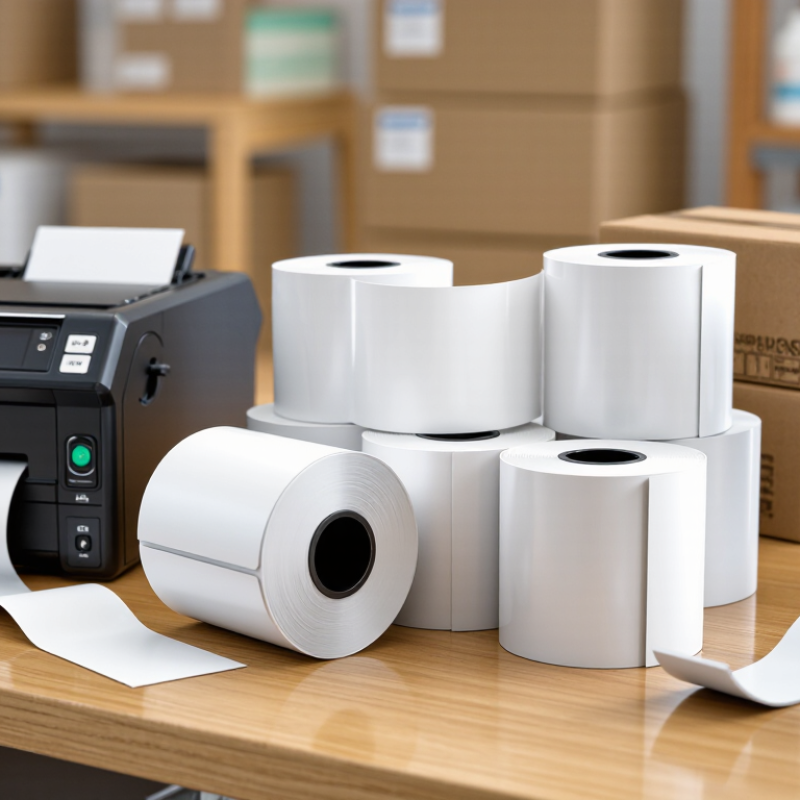
Define the Label’s Intended Use and Printing Environment
Choosing a direct thermal roll label starts with its daily job, not its appearance. I have seen labels that looked sharp at packing time fade after one week near a sunny loading door. Define the use clearly: shipping, shelf tags, visitor badges, weighing, or short-term inventory control. Each task demands a different balance of image life, size, adhesive strength, and handling resistance. A label for a dry indoor shelf rarely needs the same construction as one exposed to condensation.
Map the printing environment before selecting the roll. Note temperature, humidity, dust, friction, sunlight, and contact with oils or cleaning fluids. Cold rooms can make some adhesives brittle, while moisture may curl unprotected stock. Direct thermal material also reacts to heat. Store rolls away from radiators and windows, and keep them sealed until needed. Check the printer’s supported width, core size, roll diameter, and winding direction. Small mismatches cause poor feeding, crooked images, or wasted labels. They happen more often than expected.
Run a practical trial under real conditions. Print a sample, apply it to the actual carton or surface, and handle it like a worker would. Rub it, chill it, stack it, and scan it after exposure. Record the results instead of trusting a quick visual check. Ask for technical data on darkness, shelf life, adhesive performance, and recommended storage. I once approved a label after a clean indoor test, then found the barcode fading beside a window. That mistake changed my process: test the environment, not just the printer. If the label must last for months outdoors or under intense heat, direct thermal may be the wrong technology. Be willing to reconsider.
Choose the Correct Roll Size, Core, and Printer Compatibility
7 Tips for Choosing Direct Thermal Roll Labels
Choosing the correct roll size starts with the label, not the printer. Measure the required width, height, gap, and winding direction. A roll that looks suitable may still cause sensor errors. Leave enough margin for readable barcodes and clean application. The GS1 General Specifications recommend consistent symbol quality, because poor contrast or distortion can reduce scanning reliability. This matters as parcel volumes rise. The Pitney Bowes Parcel Shipping Index reported 161.8 billion parcels worldwide in 2022.
Core selection is equally important. Check the printer’s supported core diameter, roll outside diameter, and maximum label width. A three-inch core may fit a high-volume printer, while a smaller desktop unit may require a one-inch core. Never assume. I have seen purchasing teams match the label width but overlook the core. That small error can stop production.
Printer compatibility involves more than physical fit. Confirm direct thermal support, media thickness, sensor position, print speed, and maximum roll diameter. Review the printer’s technical sheet before ordering. Smithers’ label industry analysis identifies continued growth in digitally managed and on-demand labeling, increasing the need for flexible media choices. Test one roll under real conditions. Include dust, temperature changes, storage time, and the actual application surface. Results can be imperfect. That is useful. Keep a sample record with dimensions, core size, adhesive behavior, and scan results. It makes the next purchase less speculative.
7 Tips for Choosing Direct Thermal Roll Labels
Choose the correct roll size, core, and printer compatibility before ordering direct thermal labels.
Typical maximum roll outside diameters vary by printer class: mobile printers generally use compact rolls, desktop printers commonly support rolls up to about 127 mm, and industrial printers can accommodate rolls around 203 mm. Core diameters are commonly 19.1 mm, 25.4 mm, or 76.2 mm. Always confirm the printer’s supported label width, maximum roll diameter, core size, media gap, and direct thermal compatibility before purchasing.
Evaluate Adhesive Strength, Durability, and Image Longevity
7 Tips for Choosing Direct Thermal Roll Labels
Choosing direct thermal roll labels starts with the adhesive, not the printer. Check whether the label must stick to cardboard, plastic, glass, or rough packaging. A strong adhesive can fail on dusty or damp surfaces. Clean, dry contact matters. Test a small batch first. Press labels onto the real surface, then check edges after 24 hours.
Consider temperature, friction, moisture, and handling time. Labels used in chilled storage need adhesive designed for cold surfaces. Labels on shipping cartons may face rubbing, stacking, and repeated movement. A label that looks secure at noon might lift by evening. Ask for peel and shear data when available. These measurements are more useful than vague claims such as “extra strong.” Still, laboratory results cannot perfectly copy a busy warehouse.
Image longevity also deserves careful testing. Direct thermal labels react to heat, light, and friction. Store unused rolls in a cool, dry place away from windows. Print a sample, expose it to normal handling, and compare it after several days. A clear image is essential for barcodes, dates, and inventory details. I once judged a label only by its fresh print quality, which was a mistake. The image faded faster than expected near a warm loading area. Check print darkness, coating quality, and scanner readability. Do not assume the cheapest roll will perform consistently.
Compare Supplier Quality, Compliance, Cost, and Order Flexibility
Choosing direct thermal roll labels requires more than comparing prices. Check the supplier’s paper consistency, coating, core size, and winding direction. A reliable roll should feed smoothly through your printer without curling or frequent jams. Request samples and test small barcodes, dense text, and sharp graphics. Keep the results.
Ask for documented material specifications and batch traceability. Confirm that the adhesive suits your cartons, plastic containers, or cold storage surfaces. Compliance evidence should match your destination market and application. Do not accept vague claims. I have seen attractive samples fail after humidity exposure. That mistake was avoidable.
Compare the full cost, not only the roll price. Include shipping, setup charges, waste, printer adjustments, and replacement risk. Check whether pricing changes with different widths, lengths, or core sizes. Review minimum order quantities and lead times carefully. Flexible suppliers should support trial orders, mixed specifications, and repeat purchases. This matters when demand changes unexpectedly. Inspect packaging too; crushed edges can ruin otherwise good labels. Ask how quality complaints are investigated and resolved. A clear replacement process shows accountability. My own preference is a supplier that shares test methods, but I still verify performance in real working conditions. Supplier promises are useful. Production evidence is better.