What Is the Best Packaging Material for Global Shipping?

Choosing the best packaging materials for global shipping is not a simple matter of selecting cardboard, plastic, or metal. The right choice depends on distance, handling, humidity, temperature, product weight, and transport mode. A pallet crossing oceans may face salt air, container vibration, compression, and repeated loading. A package that looks strong in a warehouse can still fail after weeks at sea.

UNCTAD’s Review of Maritime Transport reports that shipping carries more than 80% of world merchandise trade by volume. This makes moisture resistance and structural strength critical for international deliveries. Meanwhile, the OECD’s Global Plastics Outlook identifies packaging as a major source of plastic waste. These findings create a difficult balance: packaging must protect products reliably, yet it should not create unnecessary environmental damage. Smithers’ global packaging market research also shows continued demand for lighter, more efficient formats. However, lighter is not always better if it increases breakage.

Walter Soroka, author of Fundamentals of Packaging Technology, stated, “Packaging is the means of getting a product from one point to another in the same condition it was in when it left the source.” That practical definition remains useful. Recyclable paper may suit dry, lightweight goods, while molded pulp, corrugated board, reusable plastic, or engineered timber may perform better in demanding routes. There is no universal winner. The honest answer requires testing, not assumptions. Drop tests, compression tests, humidity trials, and real shipment records should guide the final decision. Even experienced teams get this wrong sometimes. That is why global packaging design should combine material efficiency, product protection, supply-chain evidence, and measurable environmental goals.
What Is the Best Packaging Material for Global Shipping?

Packaging Material Requirements for Global Shipping

What Is the Best Packaging Material for Global Shipping?

Packaging Material Requirements for Global Shipping

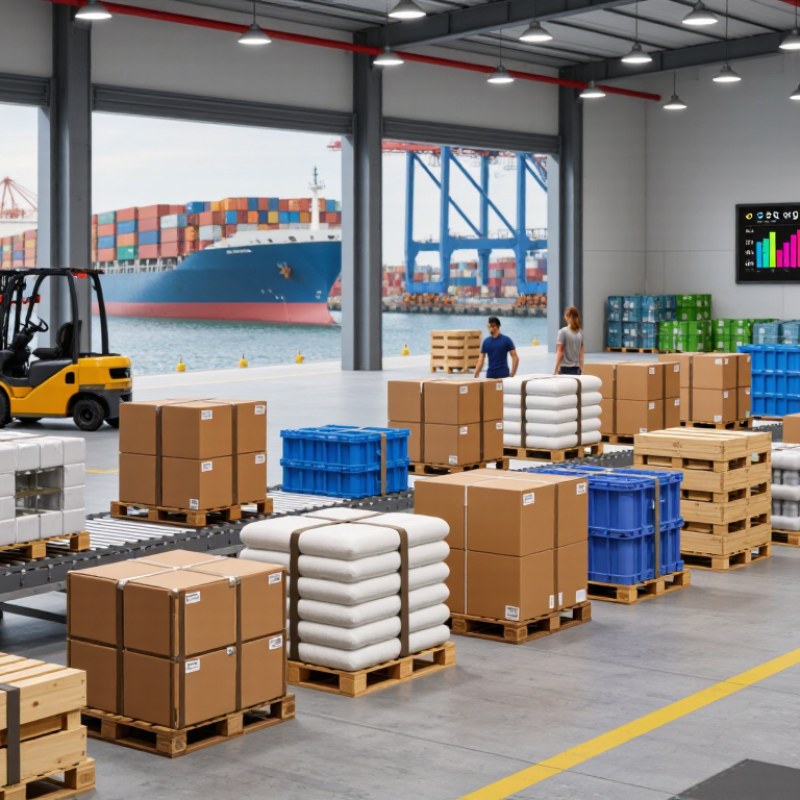
Global shipping exposes packages to vibration, pressure, humidity, temperature changes, and repeated handling. The best material depends on the product, route, weight, and delivery environment. Corrugated fiberboard is practical for many shipments because it is light, stackable, and easy to customize. Heavy or irregular products may require stronger outer cartons, wooden crates, or reinforced plastic containers. However, heavier packaging can increase dimensional weight and transportation costs.

Moisture protection deserves careful attention. Use water-resistant coatings, sealed inner bags, or desiccant packs when products may face damp storage conditions. Internal cushioning should stop movement without creating unnecessary empty space. Paper, molded pulp, foam, and air-filled materials each suit different products. Fragile items need cushioning around corners and edges, not only on top. Packaging must also support clear labels, stable stacking, and secure closure. Check destination requirements for materials, markings, and recycling expectations. A package can be strong yet still fail because its label becomes unreadable.

Tips: Select materials after measuring the product and its packed weight. Test a packed carton with drop, compression, and vibration checks. Photograph damage points during testing. In my experience, one weak corner can undo careful packing elsewhere. I still find that “eco-friendly” choices need practical review, especially when moisture or long storage is involved. Avoid filling every gap blindly; excessive material may raise costs and complicate unpacking.

Comparing Common Packaging Materials and Their Key Properties

What Is the Best Packaging Material for Global Shipping?

Comparing Common Packaging Materials and Their Key Properties

Corrugated cardboard remains a practical choice for many international shipments. It is lightweight, recyclable, and easy to customize. Its strength depends on flute design, board grade, moisture exposure, and box size. Double-wall cardboard protects heavier products better than thin single-wall boxes. Yet, cardboard can weaken after sitting on a damp loading dock. That detail is easy to overlook.

Molded pulp cushions fragile items and reduces plastic use. It performs well against minor impacts, but it needs careful sizing. Foam provides stronger cushioning and absorbs repeated shocks more effectively. However, some foam types take more storage space and create disposal concerns. Plastic mailers resist water and often weigh less, but they offer limited protection against crushing. Wooden crates handle heavy machinery well, although they increase weight and may require destination-specific treatment documentation. In practical packing trials, drop, vibration, and compression tests reveal weaknesses that visual checks miss. I still find that no material wins in every situation.

Tips: Match the material to the product’s weight, fragility, moisture sensitivity, and travel distance. Leave minimal empty space inside the carton. Use internal cushioning, not excessive layers. Seal every seam firmly. Record test results, then revise the design when damage appears. A slightly heavier package may reduce replacement costs, but that assumption should be tested.

What Is the Best Packaging Material for Global Shipping? - Comparing Common Packaging Materials and Their Key Properties
Packaging Material Typical Weight Moisture Resistance Shock and Vibration Protection Stacking and Compression Performance Puncture Resistance Recyclability Reusability Space Efficiency Best Use in Global Shipping
Corrugated Fiberboard Light Low
Needs liners, coatings, or inner bags in humid conditions.
Medium
Good when combined with inserts and adequate box sizing.
High
Strong performance when the box is correctly designed and dry.
Medium Widely recyclable
Keep free from excessive food, oil, and moisture contamination.
Limited
Usually suitable for several shipment cycles if kept dry.
High
Boxes can be shipped and stored flat.
General merchandise, e-commerce parcels, and palletized freight.
Molded Pulp Light to medium Low
Absorbs moisture unless treated or protected by an outer package.
Medium
Effective for shaped products and moderate impact protection.
Medium Low
Can crack or tear under concentrated force.
Widely recyclable
Often compostable only when free of coatings and additives.
Limited Medium
Nested parts can reduce storage volume.
Protective trays, bottle separators, electronics accessories, and fragile molded products.
Honeycomb Paperboard Light Low
Performance declines when exposed to prolonged humidity.
Medium
Provides effective cushioning and surface protection.
High
Good strength-to-weight ratio when used as pads or edge protection.
Medium Widely recyclable
Separate from plastic films and heavily contaminated materials.
Limited High
Can be supplied in rolls or compact sheets.
Pallet layer pads, corner protection, void filling, and lightweight panel protection.
Expanded Polyethylene Foam Very light High
Closed-cell structure provides strong resistance to water absorption.
High
Excellent cushioning for repeated impacts and vibration.
Medium
May compress permanently under long-term heavy loads.
Medium Limited
Recyclability depends on local collection and specialized programs.
High
Can be reused many times when clean and undamaged.
Medium
Foam inserts may require additional storage space.
Precision instruments, automotive parts, furniture edges, and moisture-sensitive goods.
Expanded Polystyrene Foam Very light High
Resists water absorption better than many open-cell materials.
High
Good cushioning for low- to medium-weight products.
Medium
Can fracture or lose performance after severe compression.
Low
Rigid foam can break when exposed to sharp or concentrated impacts.
Limited
Collection is not available in all regions.
Limited
Reusable when intact, but often damaged during handling.
Low
Bulky relative to its weight.
Temperature-sensitive products, appliances, and lightweight fragile goods.
Reusable HDPE Plastic Tote Medium to heavy High
Water-resistant and suitable for humid transport environments.
Medium
Requires internal cushioning for fragile products.
High
Rigid walls support repeated stacking and handling.
High Recyclable
Commonly identified as plastic type 2, subject to local recycling systems.
Very high
Designed for repeated return and reuse cycles.
Low
Empty totes require return logistics and storage space.
Closed-loop supply chains, regular industrial shipments, and repeat international routes.
Plywood or Wood Crate Heavy Medium
Requires suitable treatment and protection against prolonged moisture.
Medium
Strong outer protection when properly engineered.
High
Suitable for heavy loads and large products.
High Conditionally recyclable
Disassembly and local wood-processing facilities may be required.
High
Can be reused if structurally sound.
Low
Heavy and relatively space-intensive.
Heavy machinery, industrial equipment, oversized cargo, and high-value shipments requiring rigid protection.
Note: Ratings describe typical performance under normal transport conditions. Actual results depend on material grade, package design, product weight, humidity, handling, stacking duration, and the selected transport mode.

Selecting Materials for Product Type, Weight, and Fragility

What Is the Best Packaging Material for Global Shipping?

Selecting packaging by product type, weight, and fragility prevents expensive failures. Rigid corrugated fiberboard suits books, garments, and boxed household goods. It provides stacking strength without excessive weight. For heavy machinery parts, double-wall board or molded pulp may perform better. Polyethylene cushioning protects surfaces from abrasion, but it can trap moisture around metal products. That detail is easy to miss.

Fragile glassware needs a different structure. Use molded pulp, foam, or honeycomb inserts to keep items away from the outer wall. A 25-kilogram shipment also needs compression resistance, not simply thicker padding. International Safe Transit Association testing commonly examines drops, vibration, and compression. These tests should reflect actual routes, including rough handling and long warehouse storage. My practical concern is that “universal” packaging rarely exists. A design that protects ceramics may waste space around textiles.

Material decisions should also consider environmental data. The OECD’s Global Plastics Outlook reported 353 million tonnes of plastic waste in 2019, with only 9% recycled. The World Bank’s What a Waste 2.0 estimated 2.01 billion tonnes of municipal solid waste annually. Therefore, right-sizing matters. Recyclable fiberboard can reduce mixed-material complexity, while reusable plastic cases may suit frequent closed-loop shipments. However, recycled content can lower stiffness. Test the actual material, not its label. Small pilot shipments, recorded damage rates, and compression results offer more reliable evidence than assumptions.

Evaluating Cost, Sustainability, and International Regulations

Global shipping rewards packaging that survives distance without wasting space.

Cost is not only the box price. Freight charges often reflect dimensional weight, while damage creates replacement, return, and disposal costs. A packaging audit should compare corrugated fiber, molded pulp, paper cushioning, and reusable plastic systems against product fragility and route conditions. The cheapest option can become expensive after one wet container or crushed corner.

Sustainability requires evidence, not attractive claims. The OECD’s Global Plastics Outlook reports that only 9% of plastic waste was recycled globally in 2019. UNEP’s Global Waste Management Outlook 2024 projects municipal waste could reach 3.8 billion tonnes annually by 2050, up from 2.3 billion tonnes in 2023.

Recycled fiber may reduce virgin material demand, but it can lose strength in humid routes. I would not call it automatically greener. Measure material weight, recycled content, damage rates, and end-of-life access in the destination market.

Tips: Use right-sized cartons, test drop and compression performance, and keep cushioning removable. Check destination recycling rules before printing disposal instructions. For wooden pallets or crates, confirm ISPM 15 treatment and marking requirements. The EU Packaging and Packaging Waste Regulation 2025/40 also introduces progressive recyclability and recycled-content obligations. Requirements differ by product and market. Keep supplier declarations, test reports, and material specifications together. Small gaps in documentation can delay clearance.

Building a Practical Packaging Strategy for Worldwide Delivery

What Is the Best Packaging Material for Global Shipping?

Building a Practical Packaging Strategy for Worldwide Delivery

The best packaging material depends on the product, route, climate, and handling risk. A practical strategy often combines corrugated fiberboard, molded pulp, paper cushioning, and moisture-resistant layers. In warehouse trials, a strong outer carton usually performs better than an overly thick one. That difference matters. Heavier packaging can increase transport costs and emissions. For dense or sharp products, reinforced fiberboard may provide better resistance. Moisture is another concern. Use protective liners when shipments may face rain, humidity, or long storage periods. Do not assume one material fits every route.

Map the journey before choosing materials. Consider stacking pressure, vibration, drops, temperature changes, and customs inspections. Paper-based cushioning works well for many household products. Fragile items may need molded inserts or carefully fitted partitions. Cushioning should prevent movement without crushing the product. Small tests reveal problems early. Drop tests, compression tests, and vibration checks provide useful evidence. In practice, teams sometimes overprotect the item and still miss a weak corner. That mistake deserves review.

A global packaging plan should also simplify packing work. Use clear pack-out instructions, consistent carton sizes, and visible handling information. Keep materials easy to separate for recycling where local systems allow. Track damage by product type, destination, weather, and carrier handoff. Review the data monthly, even when damage rates appear low. Some choices will be imperfect. A lighter box may reduce cost but fail during wet storage. Shipping conditions change, so packaging decisions should change with them.