In recent years, premium packaging has gained significant attention in the sustainable product sector. Brands are increasingly recognizing the importance of packaging that not only protects their products but also reflects their commitment to environmental responsibility. This shift aligns with consumer preferences for eco-friendly options.
Moreover, the demand for premium packaging designs that convey luxury and sustainability is on the rise. Companies are experimenting with innovative materials, like biodegradable plastics and recycled paper. These materials not only reduce waste but also enhance the overall product appeal. Yet, navigating these trends can be challenging. Some brands struggle to balance aesthetics with sustainability.
The future of premium packaging lies in creativity and authenticity. Brands need to convey their values through their packaging. However, this journey is not without pitfalls. Companies may miss key sustainability certifications or fail to communicate their eco-friendly efforts effectively. As we explore the top trends for 2026, the focus will be on how to improve premium packaging while ensuring sustainability remains at the core.

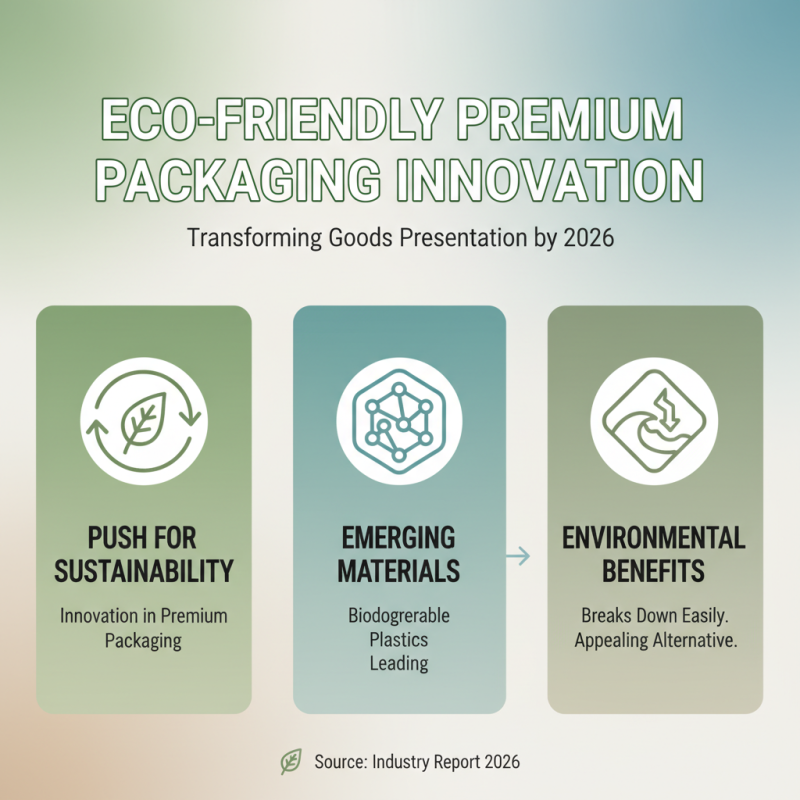
The push for eco-friendly products has led to innovation in premium packaging. In 2026, emerging materials can transform how businesses present their goods. Biodegradable plastics are gaining traction. These materials break down easily in the environment, offering an appealing alternative to traditional options.
Another exciting development is the use of plant-based inks. These inks are safer and reduce harmful waste. They provide vibrant colors without compromising sustainability. However, companies must carefully choose their suppliers to ensure quality. Not every provider matches up to the claims.
Tips: Consider experimenting with new materials before committing to larger quantities. This allows companies to evaluate effectiveness without a heavy upfront investment. Collaborating with local suppliers could also enhance your brand's eco-friendly image. Always ask for certifications to ensure genuine sustainability.

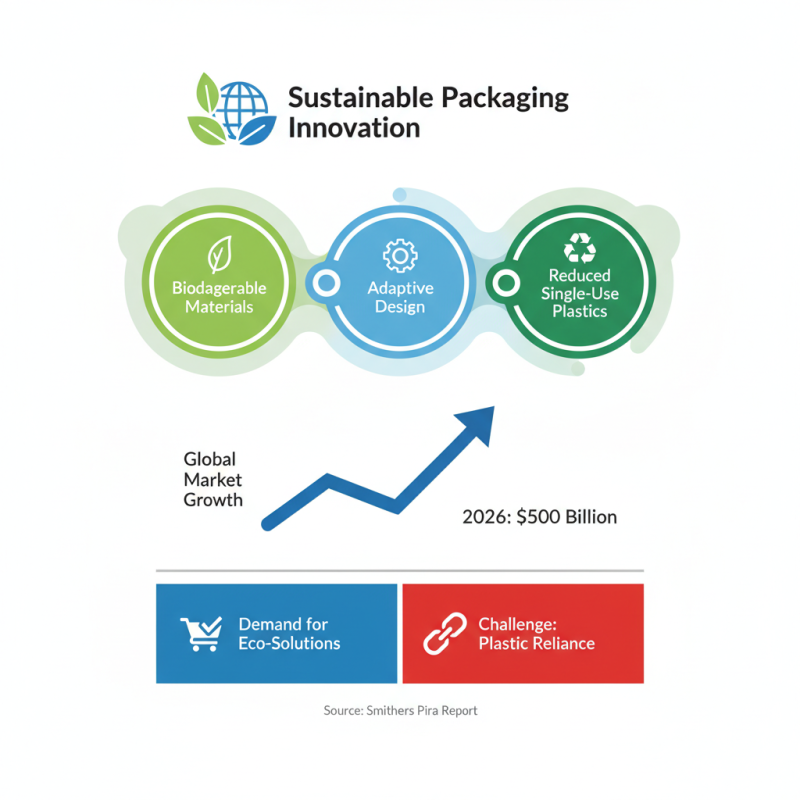
Innovative design strategies are crucial for advancing sustainable product packaging. A recent report by Smithers Pira noted that the global market for sustainable packaging could reach $500 billion by 2026. This shift highlights the demand for adaptive design. More brands are focused on using biodegradable materials, yet many still rely on single-use plastics. This contradiction reveals a need for improvement in sustainable practices.
An effective design strategy involves minimalism. Simple structures can reduce material waste significantly. Additionally, consumer perception plays a vital role. A study found that 72% of consumers say they’re influenced by packaging design when making purchases. This indicates that brands should emphasize sustainable visuals that tell a story. However, the challenge remains; while many companies aim for eco-friendliness, some are unsure how to balance aesthetics and function.
Biodegradable and recycled materials are gaining traction, yet not all options are affordable. The cost barrier often leads to decisions that may compromise sustainability. Brands must navigate these choices wisely. Moreover, transparency about materials can boost consumer trust. As the sustainable packaging landscape evolves, ongoing reflection and adaptation are essential. Balancing profit margins and eco-friendly initiatives is a complex journey. Many remain in a trial-and-error phase, searching for the perfect balance.
Consumer preferences are transforming premium packaging trends in 2026. There's a growing desire for sustainable solutions. Shoppers now seek materials that are eco-friendly and recyclable. They appreciate packaging that minimizes waste. Bright colors and bold designs also catch their eye, but they must be sustainable.
Interestingly, many consumers want transparency. They favor brands who openly share their packaging materials. This demand drives companies to innovate. Some explore plant-based plastics, while others use recycled paper. On the flip side, some brands struggle to balance aesthetics and sustainability. It’s a challenge to make attractive packaging that is also environmentally friendly.
Another key aspect is the tactile experience. Consumers enjoy handling unique textures and shapes. This engages their senses, making the product more appealing. However, some packaging can feel excessive. An over-the-top design may undermine its sustainability. Striking the right balance is crucial. Brands must listen closely to consumer feedback to improve.
As sustainability continues to dominate the packaging landscape, regulatory influences play a crucial role. Governments worldwide are tightening regulations on materials and practices, urging brands to reevaluate their strategies. According to a recent report by Smithers Pira, over 75% of companies are adapting to these regulatory changes. This shift is not merely a compliance issue; it’s a chance to innovate.
Despite these pressures, challenges remain. Some brands struggle with sourcing eco-friendly materials. The transition can be complex. For instance, not all biodegradable options break down properly in landfills. The industry must critically assess which materials genuinely meet sustainability benchmarks. Clarity is essential to avoid greenwashing, which can erode consumer trust.
Tips: Strive for transparency in your sourcing. This builds credibility. Consider engaging your audience. Educate them on the benefits of your packaging choices. It fosters a sense of community. Additionally, prioritize collaboration with suppliers. Sharing insights can drive innovation and compliance with evolving regulations.
| Trend | Description | Regulatory Influence | Impact on Consumer Behavior |
|---|---|---|---|
| Biodegradable Materials | Use of materials that decompose naturally to reduce waste. | Stricter regulations on plastic usage promoting biodegradable options. | Increased preference for eco-friendly products among consumers. |
| Minimalistic Design | Focus on reducing packaging complexity for sustainability. | Regulatory measures encouraging reduction of packaging waste. | Greater consumer attraction towards simple, elegant packaging. |
| Recycled Materials | Incorporation of recycled content in packaging materials. | Regulations mandating minimum recycled content in packaging. | Higher willingness to purchase products with recycled packaging. |
| Smart Packaging | Use of technology to enhance package functionality and reduce waste. | Standards for smart materials and their impacts on recyclability. | Increased consumer engagement through interactive packaging. |
| Circular Economy Packaging | Designing packaging for reuse and recycling, enhancing lifecycle. | Policies supporting closed-loop systems and waste reduction initiatives. | Growing consumer support for brands promoting sustainability. |
The role of technology in advancing sustainable packaging is vital. Emerging technologies are shaping how we approach packaging materials. From biodegradable plastics to smart packaging, innovation is at the forefront. But progress does not come without challenges. Many technologies are still in development, requiring further testing and consumer education.
Biodegradable materials offer great potential. They can reduce waste significantly. However, not all biodegradable options break down efficiently in every environment. We must carefully assess these materials' impacts. Smart packaging is another exciting trend. It uses sensors to monitor freshness and minimize waste. Yet, integrating such tech can be complex. It raises questions about costs and accessibility.
Sustainability in packaging also relies on transparency. Consumers demand to know how products are made and sourced. Tech can provide vital data, but companies must be authentic. Misinformation can damage trust. As we explore these innovations, it's essential to stay open-minded about their effectiveness. Adapting to new methods can lead to a greener future, but we must evaluate their long-term implications.